

Last week I was invited to respond to questions from bid and proposal professionals at an ask the expert session in the Stargazy community. https://shorturl.at/8vkYB There was one topic: setting up bid strategy before responding to an RFP. The questions came from practitioners in Australia and overseas and all of them were ones I hear from clients. The questions and my answers are below. "What do you ask a client before you start writing?" My first question to explore is about the bid or no bid decision. A deer-in-the-headlights look at that point is not a good start. Three questions need a clear answer: why this tender, why now and why this organisation. "We just saw it and thought we'd have a go" is not an answer. The second conversation is about the customer, and the background behind the RFT. What matters is understanding what is happening behind the scenes including who the decision-makers are, what stresses them, what has gone right or wrong with the incumbent, the history of the relationship, recent media and any other internal pressure points. If these questions cannot be answered without major fuss or internal chaos, my advice is no bid. An earlier Therisano post covered where customer intelligence comes from: when every response reads well, writing well stops being what wins the tender. https://www.therisano.com.au/when-every-response-reads-well-writing-well-stops-being-what-wins-the-tender "What works best in engaging Australian federal agencies before the RFP?" The questioner noted the volume of US federal capture material, some decent UK and EU knowledge and not much on Australia. Most capture work sits with the client rather than the external consultant, so my answer comes from working with the clients who do it well. The Australian market is still relationship-driven. This is not beers at the pub and handshake deals breaching probity. The clients who build strong relationships early know how to influence future direction, well before anyone talks about specific products or services. Problem framing sits upstream of scope, budget, evaluation criteria and contract model. Whoever frames the problem picks the game played out at tender time. Aged care is a working example. Define the problem as "more care workers, more training places, more nurses" and the RFT is about training volumes and headcount pipelines. Reframe it as "reduce the time from qualification to employment" or "reduce first-year churn out of the industry" and the RFT becomes about retention outcomes, deployment and pastoral care models. The discussion with the agency then becomes an exploration of what is possible, what leading practice looks like and which risks it should watch for. The other piece is homework. Each agency releases forward procurement plans, portfolio budgets tell you where the money is and ministerials and media tell you where the attention is going. Every machinery of government change moves money and fresh RFTs follow. Follow the money early, then influence what the end goal looks like. "What do you wish clients already understood about win themes?" This followed a question about the APMP Win Themes micro-certification, which I pilot tested this year. It is an excellent refresher on win themes as the joiner between strategy and writing, broken down plainly: what matters to the customer, what the strategy should focus on, why the customer would pick us and how to make sure evaluators score us. The term itself causes trouble. Use "win themes" up front and most clients picture slogans and taglines. With any client, new ones especially, I run a strategy discussion instead: why they are bidding, how they stand out from competitors and what the value and benefit of their offering is. I listen to the standard information, then ask a lot of questions to get them thinking differently about what they have to offer. The response then shows evaluators "we understand your problem, here is how our solution benefits you and here is the value". One previous client opened with "let's talk about response strategy, but don't give me any of that win theme rubbish". We talked strategy and the win themes came out of it anyway. A win theme is the response strategy made visible, and it does the evaluator's work for them by positioning the whole response around the benefit, value and justification for choosing the offer. "What shows up in the debrief when you did everything right and still lost?" This was the easy one. Two things stand out almost without fail. Proof, or lack of it. "Extensive experience", "proven approach" and "highly qualified team", unsupported by numbers, facts, project case studies or outcomes. Linkage, the old "what's in it for me". Responses full of detail on the solution where the link between the outcomes and the benefit to the buyer is weak, unclear or missing. Evaluators armpit-deep in responses do not want to go hunting for value. It should leap off the page. The strategy work above takes time at the front of a bid and shapes every page after it. It gives a clear view of when a tender is not worth pursuing, advice Therisano will give when needed. Therisano runs this strategy discussion with clients before a response begins. If a tender is on the horizon and those three questions do not yet have an answer, that is the conversation to have first.

Almos t every tender response claims a commitment to quality. The sentence appears in winning bids and losing bids alike, often carrying no information an evaluation panel can score. A simple test exposes the problem. Replace the company name in the sentence with a competitor's and read it again. Where the sentence still reads credibly, the claim belongs to the industry, not the bidder, it earns no marks and does you no favours. We take a generic claim to a genuine selling proposition by working through five stages. Quality makes a useful working example because it is the claim we see most often left as generic in bid responses. What the quality practices actually are “We maintain robust quality management practices” names nothing. The first move we take is to name the mechanisms behind the sentence: inspection and test plans with defined Hold Points, non-conformance or risk reporting with closure timeframes, first-pass acceptance measurement, calibrated equipment registers and subcontractor quality audits. ISO 9001 certification belongs on the list and discriminates the least. Certification is a condition of compliance on most government work and every serious competitor holds it – it's not a selling strength. Named quality practices can be assessed. A value statement can only be believed or ignored. How the practices work A named quality practice still needs a working description – who runs it, when it triggers and what it produces. A Hold or Review Point means nothing until the response says the client's representative witnesses or approves it before work proceeds. A non-conformance or risk register means nothing until the response says every item is closed within 10 business days and reported monthly. The working description is where depth and experience shows. A response which names a practice and cannot describe its operation reads as though the practice lives in the manual rather than on the job. What each practice does for the buyer The buyer does not purchase an inspection and test plan. The buyer purchases fewer defects at handover, fewer variations, less contract administration and a program which is successful. Every quality practice in the section should reflect the buyer's side of the table. Hold Points surface defects early while they are a low cost to fix, before thousands of dollars and significant time delays, reducing rework, variation claims and program timelines slip. The test for each sentence is simple: it must name a risk, cost or obligation the buyer is concerned about, or it doesn't reflect benefit. The proof behind the benefit A benefit without evidence is an assertion, and an evaluation panel cannot score assertions. Panel members need to write an evaluation report which can be audited, so the claims they reward are the ones they can defend – a delivered result, a verifiable figure, a named contract. The proof for a quality claim should already exist inside your quality system itself: first-pass acceptance rates, defects recorded at completion, warranty claims over the contract term, external audit findings and repeat-contract rates with the same clients. Proof is what converts your features and benefits into high scores. The part only you can claim Most of what the steps above produce is still equally possible for your competitors. The discriminator is what survives the swap test: a mechanism, record, person or arrangement a competitor cannot put their name to. Uniqueness rarely lives in the practice itself. It lives in how far the practice goes operationally and what record it has produced – defect data published to the client monthly rather than held internally, a quality manager named in the contract with authority to stop work, 5 years of first-pass acceptance data on contracts of comparable scale. One proven discriminator carries more weight than 6 vague shared strengths. Making it sell in the response A discriminator sells when it is tied to the buyer's own pressures and concerns. The background and objectives sections of the RFX documentation identify why the procurement exists; the selling line connects the discriminator to that reason, in the buyer's language, at the top of the relevant criterion response. Feature, benefit and proof sit beneath it as the supporting case, and the same theme reappears in the executive summary, giving the evaluation panel one consistent reason to score your bid ahead of the field. A theme stated once is a sentence. A theme carried through every touchpoint is a position. Where to from here Therisano builds response strategies from exactly this discipline – exploring the buyer's operating environment, testing hypotheses about their pressures and pain points against the tender documents and building win themes the evidence can carry.
In a previous blog we covered the 2 inputs which define the battleground a tender is fought on: customer issues and hot buttons, and the competitive landscape. This post covers the 2 which decide whether the response converts understanding into a high score. Discriminators and strategic priorities are the raw material of win themes, the backbone a winning response keeps returning to. My controversial take: both are exercises in subtraction. Most bids improve by claiming less. Owning a capability does not make it a discriminator A discriminator is the reason a buyer selects one supplier over the alternatives. The bar is higher than it first appears. The test is unforgiving. A discriminator has to connect to a problem the buyer actually has, deliver a benefit the evaluator can recognise and value, create separation competitors cannot credibly match and stand up to proof. A claim failing any one of the 4 is not differentiation. Competitive separation is the condition that removes most candidates. A discriminator exists only where the organisation’s capability intersects with something the buyer needs and the competitive field cannot match. What separated the offer on the last tender may be parity on this one, because a competitor has acquired the capability or the buyer has stopped caring about it. Table stakes are the most common false positive Accreditations, familiar methodologies, a capable team, a history of similar work and a compliant staffing model are the entry price. They are necessary to be competitive and compliant, they create no evidence for preference. The pattern is easy to recognise once it is named. If a claim could be lifted from the response and dropped into a competitor’s document without a word of editing, it is not a discriminator. It may still belong in the response as supporting content. It should not carry the argument. Where a claim is differentiated and cannot be proven, the safest treatment is removal. Unsupported claims raise the evaluation panel’s scrutiny of everything around them. Proof is the mechanism, not the appendix Differentiation without evidence reads as risk to an evaluation panel. Strong proof is specific, measurable, comparable in scale and complexity to what the buyer is purchasing and verifiable through data, references or documented performance. It sits immediately beside the claim it supports. Panels working through a large response under time pressure do not go looking for validation so it needs to be easy to find. “Extensive experience in similar environments” carries no evaluative weight. A statement that the same approach “reduced transition time by 20% across 3 named comparable contracts” proves the claim, the scale and the credibility in a single sentence. Weak proof is not neutral. It lowers confidence, because a panel which cannot verify a strong claim starts to discount the claims it has already accepted. Strategic priorities decide where the bid does not compete The final input asks for a trade-off. Not everything can be emphasised. Word, character and page limits and evaluator attention are all finite. Every paragraph spent on an issue which will not raise your score is taken from one that would. Prioritisation decides the split on 3 tests: impact on evaluation scoring, impact on the buyer’s business or mission outcomes and the advantage or vulnerability sitting in the competitive field. Inputs scoring low on all 3 tests should not shape your response. The output across the 3 tests includes a decision most teams never make explicitly, when to No Bid. Naming the areas where the offer is at parity, and treating them as compliance rather than competitive value, make the emphasis on differentiation easier. Bids which try to be strongest on every criterion but miss the 3 tests often read as undifferentiated on all of them. Strategy is owned, approved and locked Strategy set by consensus during the writing period is not strategy. It is negotiation, and it often produces responses with competing arguments. The strategy discipline is sequential. Strategic inputs are validated and prioritised, one accountable person approves them, disagreements are resolved before drafting starts and the approved direction then governs every content decision through to lodgement. Reviews test the response against the approved strategic direction not individual preference. The part which does not appear in the response None of this work is submitted. Evaluation panels never see the issue analysis, the competitive assessment, the discriminator tests or the priority decisions. They see the result. Relevance in the answers, evidence beside the claims, risk addressed before it is raised and win themes consistent enough for the panel to repeat in its own recommendation. This is the value of investing time in building a solid strategic foundation. The hours invested before the writing are worth more than the hours spent on the draft. Therisano advises Australian organisations on bid and grant strategy, from opportunity assessment through to submission. Some of that work runs across a whole pursuit, some of it is evaluation on competitive positioning about whether the bid is worth the effort.

The outcome of a tender is usually settled before the response document is opened. An earlier blog post “When every response reads well, writing well stops being what wins the tender” made the case that response strategy decisions often decide tender winners. Response strategy is specific – its about the decisions on what matters most to the buyer, why it matters and where advantage can realistically be won. It sits ahead of tender writing for a reason: everything written afterwards inherits the quality of those strategic decisions. Strategy work runs on 4 input groupings. Customer issues and hot buttons, the competitive landscape, discriminators and strategic priorities. Together, they become win themes – the small set of arguments a winning tender response is built around. This post covers the first 2 elements. Requirements name the deliverable, issues name the problem A requirement is what the buyer wrote down, you'll find them in the specifications document. An issue is the problem which made them write it. An agency asking for 24/7 service coverage has a requirement. The issue behind it may be an audit finding on response times, a service failure that reached the Minister or a workforce shortage the agency cannot solve internally. One line in the specification, 3 very different problems. A response written to the requirement talks about the bidder. A response written to the issue talks about the buyer's problem and what it takes to make the issue away. Panels score the second one higher, because it sounds like someone who understands the problem rather than someone who only read the specification. Issues surface as implied requirements, which are the expectations the buyer never wrote down and still assumes. A request for monthly reporting carries an implied requirement the reporting survives scrutiny from someone above the contract manager. Meeting the stated requirement satisfies compliance. Meeting the implied one earns confidence. Hot buttons are the few issues which decide the outcome Not every customer issue deserves the same weight. A hot button is urgent, it is visible to the people who sign the recommendation and it usually appears in the buyer’s own words, not the bidder’s. Hot buttons behave differently to ordinary issues in an evaluation. They attract disproportionate attention, they shape how panels interpret ambiguous answers and they frequently decide which of 2 close bids is preferred. A response landing squarely on a hot button earns credibility the evaluation panel carries into every other section, lifting scores on answers which never mention it. The buyer publishes more about these than most bidders read, (See the earlier post which also talks about researching the buyer’s operating environment). Discipline in reading corporate plans, audit findings, regulatory signals and the tender document’s own language as evidence instead of as background information, makes every response strategy decision stronger. Validated insight and confident assumption look identical on paper The most expensive error in bid strategy is treating an assumption as a fact. A whole response can end up built on what one person believes the client wants, formed during a site visit two years ago and never tested since. The belief may be correct. Unvalidated, it is a bet placed with the cost of the entire bid. Validated inputs carry a source: a documented statement, a direct conversation, a pattern repeated across the buyer’s recent procurements or corroboration from more than one place. Assumptions which cannot be validated still have a use, provided each one is labelled as untested before emphasis is decided. Separating the two is one of the fastest improvements available to an organisation which bids regularly. Evaluators are accountable, not neutral Evaluation panels are not reading for interest. They are short on time, alert to risk and accountable for a recommendation which must survive probity review, internal challenge and occasionally a debrief with the bidder who lost. Accountability shapes scoring behaviour. Panels are weighing performance, transition, schedule, compliance and reputational risk alongside every claim. Value for money under the Commonwealth Procurement Rules is a judgement about risk-adjusted outcomes rather than lowest price, which puts the reduction of perceived risk at the centre of a competitive response. A claim which impresses a business owner and a claim which reduces an evaluator’s exposure are rarely the same sentence. Competitors are answering the same questions Competitive landscape is the input most often skipped by organisations without a dedicated bid function, and it changes the response more than any other. Where every bidder can credibly say the same thing, the claim is invisible. Local presence, an experienced team, ISO certification and a proven methodology are usually parity, not advantage. Emphasis spent in these areas is emphasis taken from somewhere that could have scored higher. Competitive analysis is looking for 3 things: where the field is at parity and should not be emphasised, where competitors share a constraint the buyer cares about and where your offer or solution can credibly separate. Misalignment is the opening opportunity. It appears when a competitor overstates a strength the buyer does not value, misreads the priority order or leaves a live issue unaddressed. Aligned responses read as though the writer had sat in the buyer’s planning meetings. Misaligned responses read as generic, even when every technical answer is correct. What this looks like in practice The output of this stage is not messaging. It is a short, defensible set of validated inputs: the issues which matter, the hot buttons among them, the risks the panel is trying to avoid and a realistic read of the competitive field. The warning sign is finishing this stage with taglines instead of decisions. Slogans at this point mean strategy was skipped and the team has jumped ahead to messaging. Nobody notices until final review, when the draft reads well but could have come from any bidder, and there is no time left to go back and do the strategic thinking that was missed. The next blog post covers the 2 inputs which turn this foundation into scoring advantage: discriminators and the strategic priorities which decide where the bid competes. Therisano works with Australian organisations on the strategy underneath tender and grant responses, well before the writing starts. Where a pursuit matters and the direction is not yet settled, an early conversation is usually the cheapest part of the bid.
The first article in this series established why the executive summary carries so much weight: the most read, most scrutinised section of any submission, shaping how the evaluation panel receives everything which follows. The next question is what a strong one contains, and the answer is not what most bidders expect. It is not a summary of your document The most common mistake in Australian tender responses is the executive summary written as a table of contents in prose: a paragraph on the company, a paragraph on methodology, a paragraph on experience, a closing line of thanks. Everything is accurate. None of it persuades. The APMP Body of Knowledge starts from a different premise. An executive summary is not a summary of the response. It is a summary of the reasons the buyer should choose you, and every element earns its place by advancing that argument – in short, it is the “why us” combined with the “what’s in it for them”. Open in the buyer’s world, not your own Strong summaries open with the buyer: the objectives, the operating pressures, the outcome which sent them to market. The opening demonstrates, in specific terms, that you, the bidder, understands why the procurement exists. Not a restatement of the specification, which every bidder can copy, but the drivers behind it – the growth being managed, the risk being mitigated, the service standard being protected. Specificity is the test. A summary which would still make sense with another organisation’s name is not specific enough to score highly. The bidder’s name barely appears in a disciplined opening. Across a strong summary the buyer’s name appears more often than the bidder’s, separating it immediately from the self-focused summaries beside it in the pile. A value story, not a capability list Think about it from five moves: the buyer’s situation, your offer and its benefits, the investment, the path forward and a short close. The offer is presented as a direct response to the buyer’s priorities. Evaluators award nothing for enthusiasm or adjectives. Scoring responds to specific, quantified benefits: what improves, by how much, by when. “Extensive experience and a commitment to excellence” scores nothing. A measurable claim, tied to a stated priority and anchored to evidence, gains you a high score. Evidence separates assertion from persuasion. Every material claim in a winning summary should trace to proof – a delivered result, a verifiable performance figure, a relevant reference. Price belongs in the story where the rules allow it. Commercial proposals address the investment openly and frame it against the value delivered. The value-for-money argument can also be made without numbers where applicable. Strong summaries also look past the award decision. A short passage on next steps – transition, reference contact, an offer to present – signals a bidder already thinking about delivery, reducing the perceived risk of change. What is deliberately left out Disciplined summaries are defined as much by what they exclude. No long-winded corporate history. No greeting or thanks for the opportunity, and none of the polite filler which consumes an evaluator’s attention and returns nothing. The structure is the easy part The difficulty is the strategic content filling the summary: which of the buyer’s drivers decide the evaluation, which strengths differentiate and make you stand out rather than merely qualify and what all competitors will claim. Without insight, a tidy document will still persuade no one. The strategic layer, where bids are won and lost, will be the subject of the final article in this series. An experienced, objective eye across an executive summary belongs before lodgement of your submission, not after the debrief. Therisano provides exactly this service for businesses across Australia.
Your executive summary can shape how evaluators see your entire bid. Learn why it matters and how to make those opening pages count.
Strong tender responses need more than good writing. Learn how research, win themes and human judgement create the strategy that helps bids stand out.
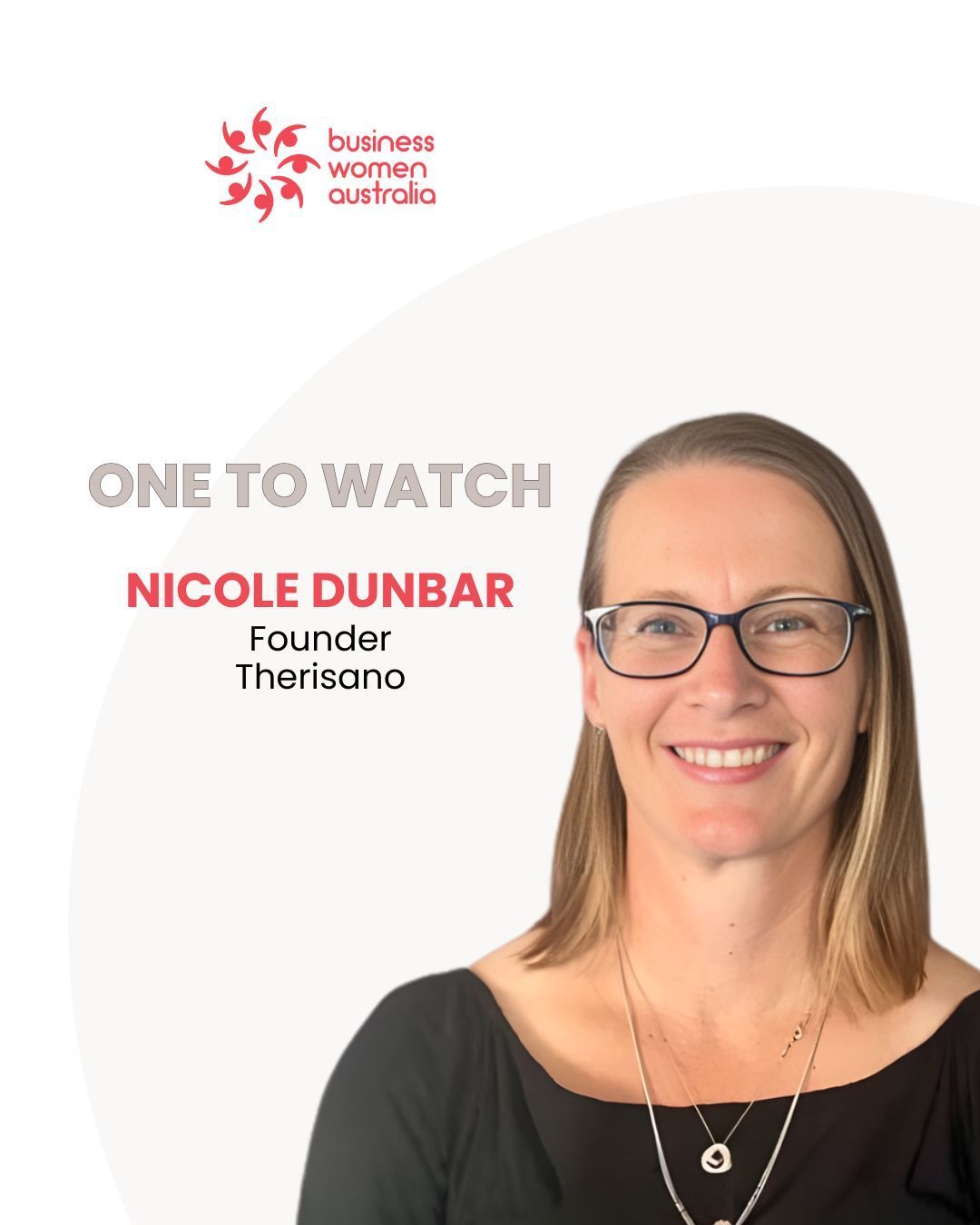
Nicole Dunbar, Founder of Therisano, brings bid strategy, tender writing, and AI-enabled process innovation to clients across government and industry.

Common issues a pre-submission review catches, and why an independent check before you submit helps your tender or grant stand out.